
AI Agents Don't Sleep. That's Why Crypto Is Their First Native Market.
2026-03-09 · 6 min read
AI / Crypto
AI Agents Don't Sleep. That's Why Crypto Is Their First Native Market.
AI Agents Don't Sleep. That's Why Crypto Is Their First Native Market.
Start with one simple fact
Wall Street closes.
Banks close.
Human traders get tired, emotional, distracted, and eventually go to sleep.
Crypto does none of those things.
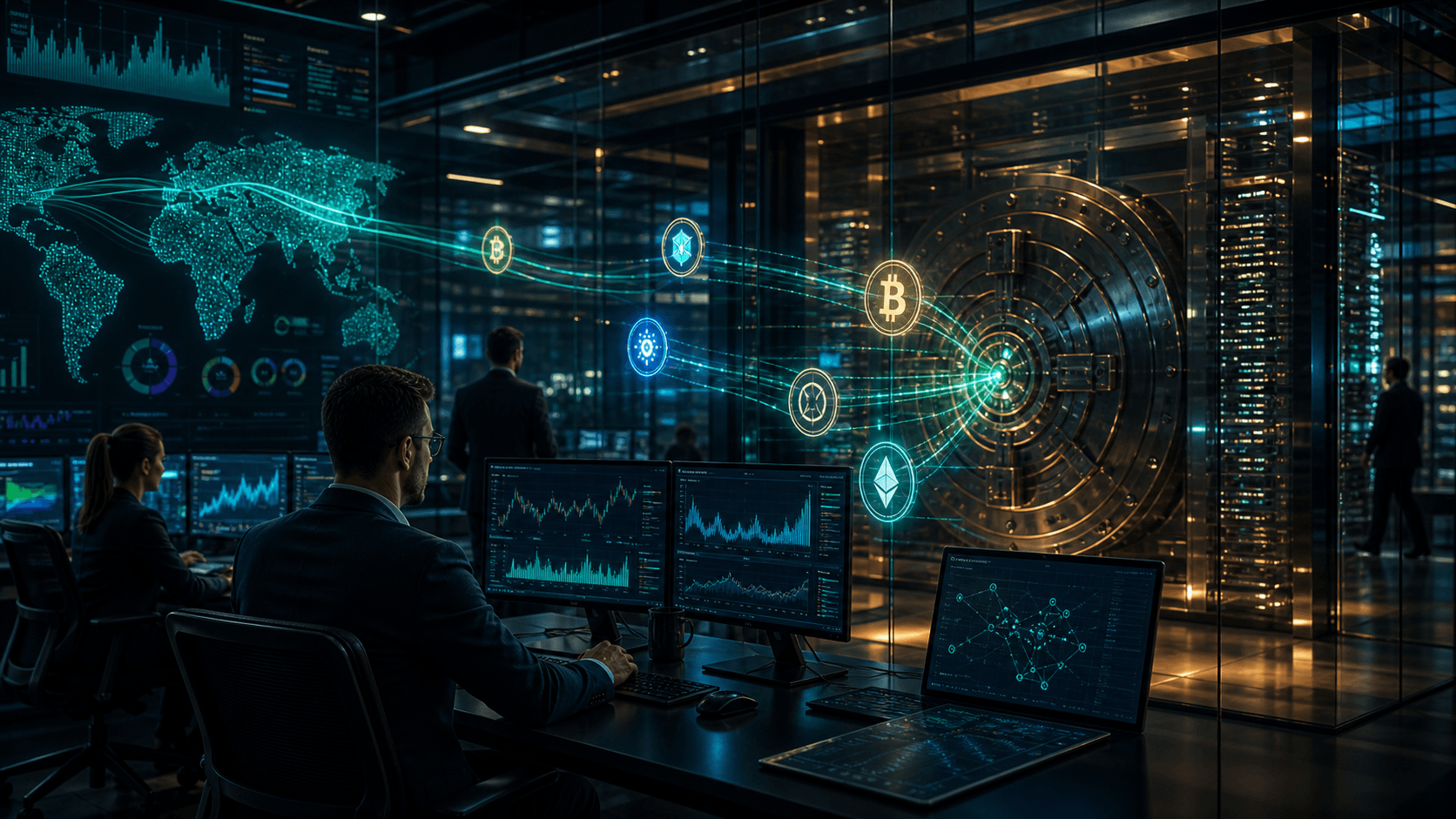
That is why crypto is such an important early battlefield for AI agents. It is not just another financial market. It is the first large-scale market that is always on, digitally native, globally accessible, and programmable from end to end.
If you want to understand where autonomous software will first become economically useful, do not start with office chatbots. Start with the market that never sleeps.
Why crypto comes before the rest of finance
Many people assume AI agents will first dominate traditional finance because that is where the largest pools of capital sit today.
But traditional finance still has friction everywhere:
- market hours
- settlement windows
- compliance bottlenecks
- fragmented infrastructure
- heavy human approval layers
Crypto is different.
A wallet is already software-native. A trade can already be executed through an API. Funds can already move globally without a banking schedule. Data is public by default on many chains. Market structure is messy, but it is digitally exposed in a way that autonomous systems can work with.
That makes crypto the cleanest live environment for agents that need to observe, decide, act, and learn in real time.
AI agents fit crypto because both are native to code
A normal trading bot follows a script.
An AI agent operates more like a persistent digital operator. It can compare multiple signals, change tactics when conditions shift, watch liquidity, monitor volatility, and keep updating its own priorities inside defined boundaries.
That matters because crypto is not just fast. It is chaotic.
Markets move across centralized exchanges, decentralized exchanges, social feeds, on-chain flows, token unlocks, funding rates, and sudden narrative shifts. A human can follow part of that picture. An AI agent can monitor much more of it at once.
The fit is obvious:
- crypto is always generating data
- agents are always available to process it
- crypto lets software hold and move value
- agents can react faster than human attention cycles
This is the deeper story. Crypto is not only a market for AI agents. It is an operating environment for them.
The real edge is not speed alone
People often hear this argument and assume the point is simple speed.
It is not.
The real edge is persistence.
An AI agent does not get bored after six hours of range-bound trading. It does not panic because a candle looks violent. It does not need motivation. It does not miss a setup because it was in traffic, asleep, or busy answering email.
That persistent attention changes the nature of execution.
In a 24/7 market, consistency matters more than occasional brilliance. The trader who catches one great move and misses twenty others is at a structural disadvantage against a system that can keep scanning, adjusting, and acting across the full week.
That is why the phrase "AI agents don't sleep" matters. It is not just a slogan. It describes an economic advantage.
What human traders become next
This does not mean human traders disappear.
It means their role changes.
The human edge shifts away from constant manual execution and toward higher-level work:
- defining risk
- choosing the right objectives
- deciding when the model should stand down
- interpreting regime changes
- auditing behavior after the fact
In other words, the human stops being the exhausted click-operator and becomes the strategist, governor, and risk architect.
That is a healthier model anyway. The goal should not be to make humans compete with machines at machine tasks. The goal should be to design systems where human judgment sits above machine persistence.
Why this matters beyond trading
Crypto is the first step, not the final destination.
Once an AI agent can:
- hold value
- make decisions
- execute transactions
- measure outcomes
- improve future behavior
you no longer have just a tool. You have the beginning of an economic actor.
That does not mean the agent is a legal person. It does mean software is moving closer to direct participation in markets rather than merely assisting humans at the edge.
This is why crypto matters so much. It gives us an early window into the machine economy before the same pattern spreads into logistics, procurement, energy routing, cloud resources, insurance, and eventually large parts of digital commerce.
Crypto is where the prototype gets stress-tested in public.
The risks are real
None of this should be viewed naively.
If many agents react to the same data in similar ways, markets can become more fragile rather than more stable. Herding can happen faster. Cascades can deepen. Bad signals can propagate faster than humans can intervene. Poorly designed autonomy can turn small mistakes into automatic losses.
There is also a second risk that matters just as much: false confidence.
An AI agent that sounds intelligent is not automatically safe. A good interface can hide weak controls. A persuasive explanation can hide poor risk logic. In finance, that gap can be expensive.
The next generation of serious systems will not be judged only by intelligence. They will be judged by:
- guardrails
- transparency
- position limits
- fail-safe behavior
- auditability
In practice, trust will matter as much as raw capability.
Three signals worth watching
If you want to track where this goes next, focus on three things.
1. Agent wallets
The biggest shift is not just better models. It is software that can directly hold and deploy capital within boundaries.
2. Agent-to-agent transactions
The machine economy becomes real when one agent can buy data, execution, compute, or liquidity from another without a human manually bridging every step.
3. Risk infrastructure
The winners will not be the loudest "fully autonomous" products. They will be the systems that combine autonomy with disciplined controls.
Sentinel Alpha take
Our view is simple: crypto will become one of the first places where human intelligence and synthetic intelligence work side by side in a serious economic loop.
Not because the market is perfect.
Because it is open enough, fast enough, and programmable enough to let this happen earlier than almost anywhere else.
The traders, builders, and researchers who understand this early will have an advantage. They will stop asking whether AI belongs in markets and start asking the more useful question:
What should humans keep, and what should machines handle?
That is the real design challenge now.
And crypto is where the answer is being written first.
If this topic matters to you, follow Sentinel Alpha on YouTube for short explainers and visit sentinelalpha.tech for the full written breakdowns.
Comments
Loading comments...